
The industrial heating process is a vital and crucial part of many manufacturing processes. Industries require heating systems that are capable of providing consistent temperatures but are also effective at conserving energy, as it is used in numerous industrial applications and processes, including metal melting, forging, brazing, hardening, annealing, and heat treatment. Some applications can still be accomplished by conventional heating techniques, but increasingly today faster, cleaner, and better-controlled heating is required in manufacturing. This is where an induction power supply plays an important role.
The electrical energy needed for the generation of the alternating magnetic field necessary in induction heating systems comes from an Induction Power Supply Manufacturers. It provides energy transfer without touching the conductive product, allowing fast and controlled heating without physical contact between the product and the energy transfer. This renders induction technology ideal for industries with an agenda of increasing production efficiency, product quality and operational control.
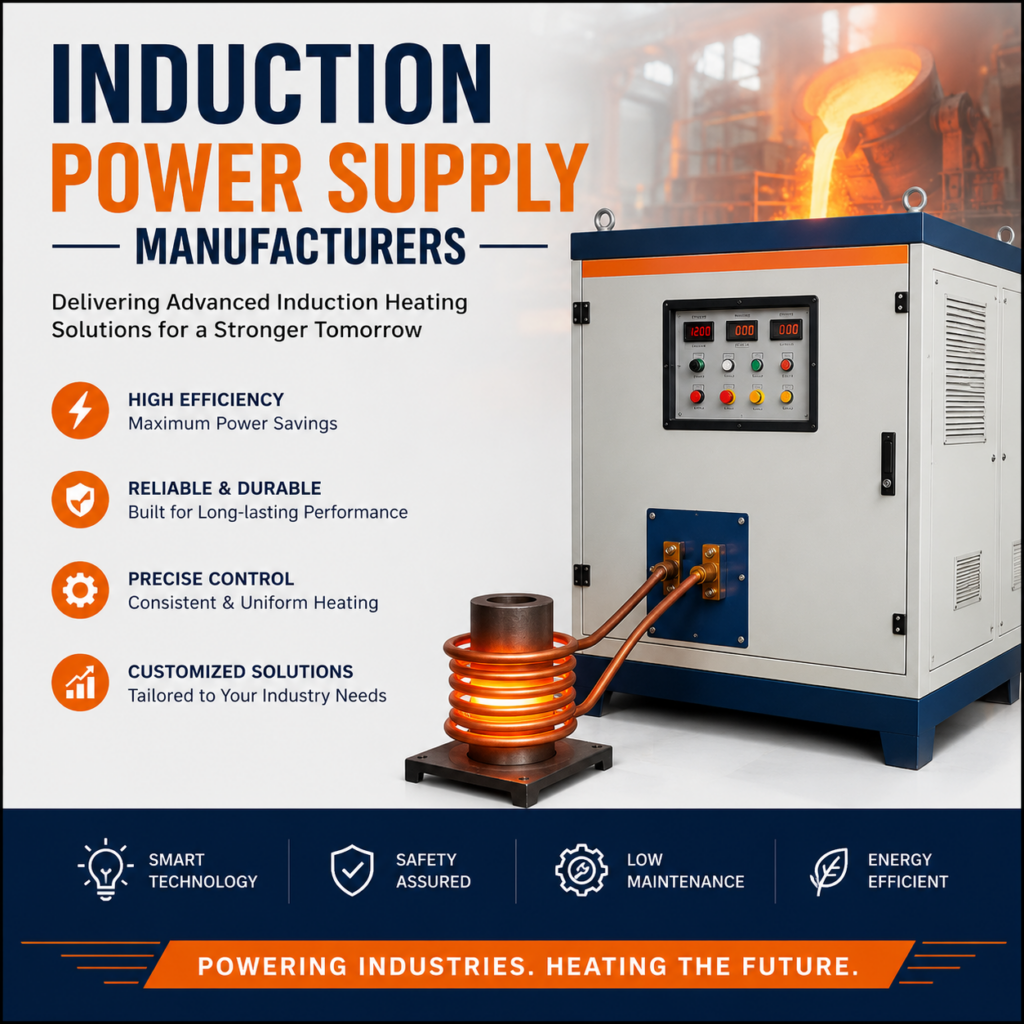
A power supply, or electrical power source, is an electrical device used to turn power on to a heating system used on a part through induction and to switch it off. It changes the input voltage and output frequency and power to the desired level of the induction coil. This coil now generates an alternating magnetic field which surrounds the object being processed. If the metal part is conductive, then moving the part into this magnetic field will cause currents to flow within the material, which are termed eddy currents.
These currents flow into the material and resist the flow, generating heat for the component to heat up. Hence, the power supply is one of the most crucial components of an induction heater system. The performance of the power system, the frequency, speed and power of the machine directly affect the speed, temperature control and performance of the entire process.
One factor that industries are keeping an eye on while being involved in induction heating is that it can be used to heat the components quickly. Induction heating generates heat inside the part, rather than transferring heat from an outside flame or furnace to the part. This direct heating method may be able to dramatically shorten the heating times in appropriate applications. The quick heating is beneficial in processing more parts within a targeted production window, which contributes towards higher productivity. Having the capability to achieve the correct temperature within a shorter time period can also help make operating methods easier to automate, such as brazing, forging, hardening or preheating operations.
Also Read This : Top 7 Factors to Consider When Choosing Induction Coil Manufacturers
Energy-saving issues have come into play in modern factories. Energy costs are often high for heating process steps, especially if they are used continuously. Induction heating may be more energy efficient than some of the other traditional heating techniques since energy is fed directly into the part to be treated. Less reliance on heating the surrounding atmosphere or furnace walls or equipment before reaching the desired temperature of the component as required.
An efficient induction power supply can provide electric power to the electro-heating system, while the induction process can be controlled based on the requirements of production. With reduced heating time and extra heat loss kept to a minimum, the manufacturer may be able to decrease energy usage per part. Such efficiencies can be especially significant in fast-paced manufacturing settings where a speed bump in productivity can make a big difference in the long run.
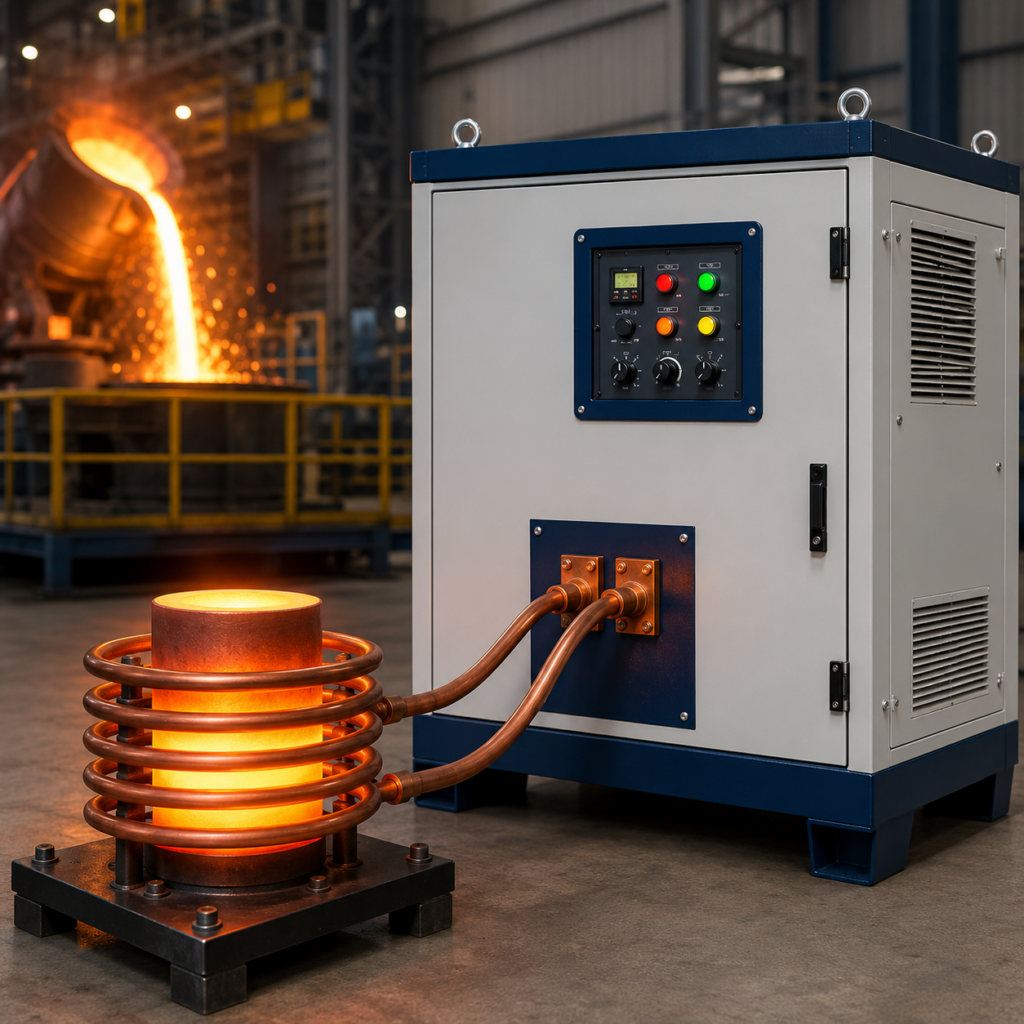
Induction heating will not require the flame to contact the piece to be heated. Consequently, it can create a purer heating environment, which means it is cleaner than some fuels used for heating. No combustion at the heating point is possible, helping to minimise problems with flames, smoke and combustion gases in the process of heating.
This results in the induction technology being appealing for environments that require a high level of cleanliness and controlled working conditions, such as manufacturing. The lack of an open flame can also be beneficial in some of the components and production procedures. But still, adequate electrical protection, cooling, shielding, and operator safety precautions are needed when using high-power induction equipment.
Suitable for Different Industrial Applications
Power supplies of this type have another massive benefit: they are versatile. The heating temperature, the depth of the process, the size of the components and the speed of production all vary in different industrial processes. Many of these requirements can be fulfilled with proper power levels, frequencies and coil designs. This flexibility allows induction power supplies to be used throughout the automotive, engineering, electrical, aerospace, fabrication and other manufacturing industries.
In today’s industrial heat technology, achieving a high temperature is not all it’s made of. Induction Power Supply Manufacturers require heating systems that have the capacity to deliver speed, precision, efficiency, repeatability and process control. To make such requirements possible, a controlled electrical energy system for an induction heating system can be made possible by an induction power supply. It can be used for very fast heating, very accurate temperature control to save time and energy, to reduce the amount of cleaning between foods being processed and to minimise the need for automation of the equipment.
It can be used in a variety of industrial uses. Induction heating is set to continue to be a significant component of advanced industrial heating systems as industries continue to seek productivity improvements or energy efficiency. The correct combination of induction power supply, induction coil and control system can help manufacturers have a reliable, consistent and production-suitable induction heating process.
Your best partner for all your induction heating needs like Hardening, Tempering, Annealing, Brazing, Forming, Shrink fitting, Curing etc


